Karni Mata Temple in Deshnok, Bikaner, Rajasthan, is one of India's most fascinating religious destinations. Popularly known as the Rat Temple of India, this unique shrine is dedicated to Karni Mata, who is revered by devotees as an incarnation of Goddess Durga. The temple is famous for its sacred rats, distinctive marble architecture, silver gates, and centuries-old religious traditions.
Located approximately 30 kilometres from Bikaner, Karni Mata Temple attracts pilgrims, history enthusiasts, photographers, and travellers from across India and abroad. Its unusual customs and spiritual significance make it different from most other temples in the country. Whether you are planning a religious visit or exploring the cultural heritage of Rajasthan, this temple offers a memorable experience.
In this guide, discover the history of Karni Mata Temple, the legend behind its sacred rats, temple timings, festivals, architecture, directions, and important tips to help you plan your visit.
History of Karni Mata Temple, Deshnok
Karni Mata is remembered as a revered spiritual figure who lived during the 14th and 15th centuries. According to local traditions, she was a Charan woman known for her spiritual devotion, influence, and service to the community. Her association with the rulers of Bikaner and Jodhpur helped establish her importance in the religious and cultural history of Rajasthan.
The temple at Deshnok developed over several stages under the patronage of regional rulers. Maharaja Surat Singh contributed to the temple's enclosure and entrance, while Maharaja Ganga Singh later helped give the structure its distinctive architectural appearance. The temple's development reflects the longstanding relationship between Karni Mata and the royal family of Bikaner.
Over generations, the shrine became an important pilgrimage destination for devotees seeking blessings and wishing to participate in its traditional rituals. Today, Karni Mata Temple remains a major religious landmark and an enduring symbol of the spiritual heritage of Deshnok.
Why Is Karni Mata Temple Famous for Rats?
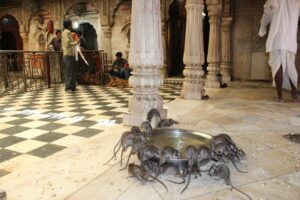
Karni Mata Temple is internationally recognised for the thousands of rats that live freely throughout its premises. These rats are known locally as
kabbas and are regarded as sacred by devotees. Unlike ordinary rodents, the kabbas are protected and treated with respect as part of the temple's religious traditions.
Visitors can observe the rats moving around the temple floors, gathering near food offerings, and sheltering in openings along the walls. Devotees sometimes offer food to the animals as an act of reverence. The presence of these rats is central to the temple's identity and draws visitors who want to understand its unusual customs.
The Legend Behind the Sacred Rats
One of the best-known legends associated with Karni Mata concerns her stepson, Laxman, who is said to have drowned while attempting to drink water at Kapil Sarovar in Kolayat. According to the traditional account, Karni Mata appealed to Yama, the Hindu god associated with death, to bring him back to life.
The legend states that Yama eventually agreed to a special arrangement under which Karni Mata's male children would be reborn as rats rather than follow the ordinary cycle of death and rebirth. This story is an important part of the beliefs surrounding the kabbas.
For devotees, the legend explains why the rats are treated as sacred beings rather than ordinary animals. Visitors should understand the story as a religious tradition that has been preserved through generations.
Why Are White Rats Considered Auspicious?
Among the rats living in the temple, white rats hold particular significance. Devotees traditionally associate them with Karni Mata and her family, and spotting one is considered an auspicious experience.
Visitors sometimes wait patiently in the hope of seeing a white rat among the many animals moving through the complex. Although sightings are not guaranteed, the belief remains an important part of the temple's identity.
The tradition also highlights the importance of treating the animals carefully. Visitors should walk cautiously, avoid disturbing the rats, and follow the guidance of temple authorities.
Architecture of Karni Mata Temple
In addition to its unusual religious traditions, Karni Mata Temple is known for its distinctive architecture. Built primarily with marble and stone, the shrine combines traditional craftsmanship with decorative elements associated with the architectural heritage of Rajasthan.
Marble Facade and Silver Gates
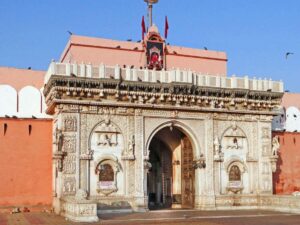
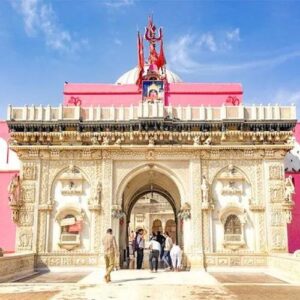
The temple's marble facade gives the structure a striking appearance. Its elaborate silver gates feature decorative panels depicting religious imagery and stories associated with Karni Mata. Intricate carvings and ornamental details reflect the craftsmanship that has contributed to the temple's reputation.
These features make the entrance particularly interesting for visitors who appreciate historic religious architecture. Photography should be undertaken only where permitted by temple authorities.
The Main Shrine
The inner sanctum houses the image of Karni Mata, adorned with traditional ornaments and garlands. Images of associated goddesses accompany the main deity, creating a setting for daily worship and devotional offerings.
The temple's architecture and religious atmosphere work together to create a distinctive pilgrimage experience. Visitors can observe the traditional practices while respecting the customs followed by worshippers and priests.
Karni Mata Temple Timings and Entry Fee
Checking the temple's visiting hours before travelling can help you plan your day more effectively. Rajasthan Tourism lists the following general visitor information:
| Visitor information |
Details |
| Temple name |
Karni Mata Temple |
| Location |
Deshnok, Bikaner district, Rajasthan |
| Opening time |
4:00 AM |
| Closing time |
10:00 PM |
| Entry fee |
Free, according to Rajasthan Tourism |
| Nearest major city |
Bikaner |
| Distance from Bikaner |
Approximately 30 km |
These timings are published by Rajasthan Tourism and Incredible India. Confirm the current schedule locally before travelling, particularly during festivals or special religious occasions.
Best Time of Day to Visit
Early morning can be a suitable time for visitors who prefer a quieter atmosphere and wish to experience morning worship. Evening visits offer another opportunity to observe the temple's devotional environment.
During major festivals, the number of visitors can increase considerably. Allow additional time for queues, transport, and entry arrangements if you plan to visit during a religious celebration.
Karni Mata Temple Aarti and Festivals
Daily worship is an important part of the temple's religious activities. Priests perform aarti and make traditional offerings, while devotees visit to pray and seek blessings. These practices preserve the temple's spiritual traditions and bring worshippers together throughout the year.
Visitors who want to attend a particular aarti should check the schedule with temple authorities before arriving, as exact timings may vary.
Chaitra Navratri Fair
The Chaitra Navratri fair generally takes place during March or April, according to the Hindu lunar calendar. Devotees gather at the temple to offer prayers, participate in religious activities, and seek blessings from Karni Mata.
This fair is one of the temple's major annual events and can attract large numbers of pilgrims. Visitors interested in experiencing the traditional celebrations should plan their transport and accommodation in advance.
Sharad Navratri Fair
A second major fair takes place during Sharad Navratri, generally in September or October. The celebrations bring devotees to Deshnok and highlight the continuing importance of Karni Mata in the region's religious life.
The exact dates change each year according to the Hindu calendar. Check the festival schedule for your intended travel year before making arrangements.
How to Reach Karni Mata Temple, Deshnok
Karni Mata Temple is located approximately 30 kilometres from Bikaner, making it accessible for a day trip from the city. Visitors can choose road or rail transport depending on their starting point, budget, and travel preferences.
By Road
Travelling by road is a convenient option for reaching the temple. Visitors can hire a taxi, travel in a private vehicle, or check the availability of local bus services between Bikaner and Deshnok.
A road journey also makes it easier to combine the temple visit with other attractions around Bikaner. Check local transport availability before setting out, especially during major fairs.
By Train
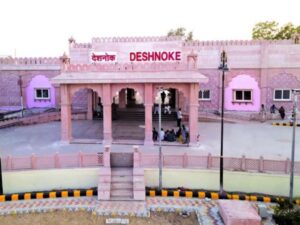
Deshnok has a railway station that connects the town with selected destinations. Depending on your route, you may be able to travel directly to Deshnok or connect through Bikaner.
Check current railway schedules and onward transport arrangements before booking your journey.
By Air
Travellers arriving by air should check the latest flight availability for Bikaner and nearby airports. Flight routes and schedules can change, so confirm the most convenient arrival point before planning the remainder of your trip.
From your arrival airport, arrange onward transport to Bikaner or Deshnok according to your itinerary.
Best Time to Visit Karni Mata Temple
The cooler months from October to March are generally comfortable for exploring Bikaner and the surrounding region. These months are suitable for combining a temple visit with sightseeing at nearby historical and cultural attractions.
Summer temperatures in Rajasthan can become very high, making outdoor travel less comfortable during the middle of the day. If you visit during warmer months, consider planning your journey for the early morning or evening and carrying sufficient water.
Festival periods are particularly interesting for visitors who want to experience the temple's major religious gatherings. However, these occasions can be crowded, so allow extra time for travel and worship.
Places to Visit Near Karni Mata Temple
A visit to Karni Mata Temple can be combined with several attractions in Deshnok and Bikaner. Exploring these destinations provides a broader understanding of Rajasthan's religious heritage, royal history, and traditional architecture.
Karni Mata Panorama
Karni Mata Panorama is a cultural attraction in Deshnok that presents stories and information about Karni Mata and her legacy. Developed to preserve and communicate her history, it can help visitors understand the traditions associated with the temple.
Check its current opening hours before including it in your itinerary.
Junagarh Fort
Junagarh Fort is one of Bikaner's best-known historical landmarks. Its fortified walls, courtyards, palaces, and decorative architectural details offer insight into the region's royal past.
Visitors interested in history and architecture can include the fort in a wider Bikaner sightseeing itinerary.
Bhandasar Jain Temple
Bhandasar Jain Temple is a historic religious landmark in Bikaner, known for its detailed decorative work and traditional architecture. It offers a different perspective on the city's religious heritage and craftsmanship.
Rampuria Havelis
The Rampuria Havelis are famous for their ornate facades and traditional merchant-house architecture. Exploring these historic buildings provides a glimpse into Bikaner's architectural character and cultural history.
Plan your itinerary according to the available time, distances, and opening hours of each attraction.
Important Tips for Visiting Karni Mata Temple
A little preparation can make your visit more comfortable and respectful.
- Follow temple etiquette: Respect local religious customs and follow the instructions of priests and temple staff.
- Walk carefully: The sacred rats move freely throughout the complex, so watch where you step.
- Avoid disturbing the animals: Do not chase, harm, or unnecessarily handle the kabbas.
- Wear appropriate clothing: Choose comfortable and respectful attire suitable for a religious site.
- Check footwear arrangements: Follow the temple's instructions regarding footwear and designated areas.
- Respect photography rules: Ask before taking photographs and follow restrictions in sacred areas.
- Plan around festivals: Expect larger crowds during Chaitra and Sharad Navratri.
- Verify travel details: Check current temple timings and transport schedules before setting out.
Following these simple guidelines will help you appreciate the temple's traditions while respecting its religious environment.